
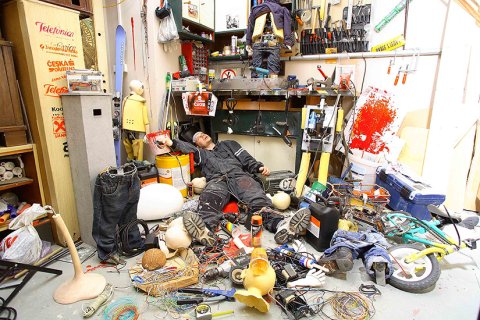
Krištof Kintera, son of Libuše Kinterová (née Pekárková) and graphic designer Vladimír Kintera, is a distinguished figure in the art community. His sister, Markéta Kinterová, is a visual artist, photographer, and author. Krištof's education at the Academy of Fine Arts in Prague was guided by Jiří Lindovský, Aleš Veselý, Michael Bielický, and Milan Knížák from 1992 to 1999, with further studies at the Rijksakademie van beeldende kunsten in Amsterdam from 2003 to 2004. Exhibiting solo since the mid-1990s, he has received three nominations for the Jindřich Chalupecký Award. Previously represented by Gallery Jiří Švestka, he was a key member of the theatrical-performative group Jednotka in the 1990s. In 1999, he was among the founders of Univerzální prostor NoD (now Experimentální prostor NoD) located above the ROXY music club, where he became the gallery's first curator. He regularly collaborates on the visual concepts and exhibitions of the 4+4 Days in Motion theater festival in Prague. He was the creative mind behind the visual concept for the 2006 One World documentary film festival. He also contributed to the controversial sculptural installation Entropa created by David Černý in 2009 for the Justus Lipsius building atrium in Brussels during the Czech Presidency of the Council of the European Union. Together with his life partner, Denisa Václavová, a cultural organizer and dramaturge of the 4+4 Days in Motion festival, they managed the ProLuka Gallery's art installation program in an undeveloped space in Prague's Vršovice from 2012 to 2017. Between 2009 and 2011, he led the sculpture studio at the Academy of Arts, Architecture and Design in Prague. In 2007, he curated the collective exhibition Hrubý domácí produkt (Gross Domestic Product) in the exhibition space of the Prague City Gallery at the Municipal Library in Prague, where he also had one of his largest solo exhibitions, Results of Analysis, in 2012. Another significant Czech exhibition, Nervous Trees, took place five years later at the Galerie Rudolfinum in Prague. The 2010s brought opportunities for solo exhibitions at major international venues including the Museum Tinguely in Basel (2014), Kunstal Rotterdam (2015), and Kunsthalle Bratislava (2016). Krištof Kintera lives in Prague.
Marka Míková is a multifaceted artist who feels just as at home navigating punk music, puppet theater, and theatrical directing, as putting on improvisational children's performances in hospitals. After graduating high school in Prague in 1979, she began her career as a prompter and trainee at the Victorious February Theatre (now Klicpera Theatre) in Hradec Králové. In 1981, she took a position at the Na Františku hospital in Prague. In 1983, she completed the People's Conservatory in Prague where she had studied theater under Ivan Vyskočil, and furthered her education in directing and dramaturgy at the Puppetry Department of the Academy of Performing Arts, culminating in her original staging of Matky (Mothers). From 1987 to 1996, she directed at Prague's Minor puppet theatre, with notable productions including Karkulín ze střechy (Karkulín on the Roof), Paví král (The Peacock King), and Létající ryba (The Flying Fish). She also created and directed original productions like Podzem (Underworld) at the Braník Theatre and adapted J. Bunyan's The Pilgrim's Progress at Rubín theatre in 1999. Between 1999 and 2001, she was a presenter at Radio Limonádový Joe and contributed to the program magazine 14. Currently, she teaches at the Higher Professional School of Acting, specializes in puppet acting, and directs dubbing. Míková is a key figure in the Loutky v nemocnicích (Puppets in Hospitals) project. She has appeared in TV films, including Robinsonka and Jak se budí princezny (How To Wake a Princess), and was a member of the bands Plyn, Dybbuk, and Zuby nehty, with whom she recorded five albums and co-authored a book of lyrics. Her work has been featured in the interview book Otočila jsem hlavu tím směrem (I Turned My Head That Way) and her literary texts and poetry have appeared in Tvar. She was nominated for a Magnesia Litera award in 2007 for her book Knihufoss.
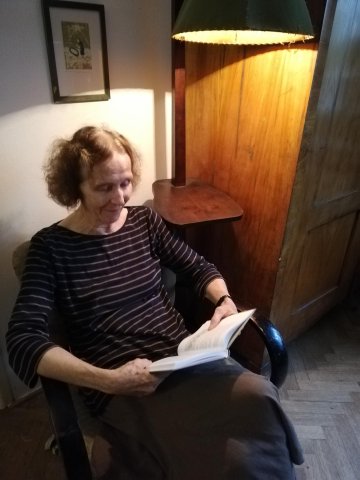
Drahoslava Janderová is a translator of French and Italian, and an indispensable editor to our publishing house. From the beginning, she has edited both large and small texts and translations, and translates some of the major adventure texts for our BigBao series. After graduating in 1964 from the Secondary School of Economics for Foreign Trade in Prague, she studied interpreting and translation at the University of 17th November in Prague. During a year-long stay in France (1968–69), she attended the Institut des professeurs du français à l'étranger at the Sorbonne in Paris. From 1969 to 1989, she was engaged in freelance translation, collaborating mainly with the World Literature review and DILIA agency (where she largely translated plays), and published numerous afterwords, articles, and studies on Italian and French literature. From the latter half of the 1970s, she contributed to the publishing of samizdat literature. She worked in the editorial office of Literární Noviny from 1990–95, and was an editor at the Academia publishing house in Prague from 1996–2005. She is renowned large for her translations of French artistic prose from the 19th and 20th centuries and the works of Italian novelist P. Levi. Additionally, she translates and edits art-related publications in both languages. In the 1980s, some works attributed to her were actually translated by her late husband, Sergej Machonin, a noted theater and literary critic, writer, and translator. More recently, Drahoslava has shifted her focus to translating literature for children and young adults. Her expertise was recognized in 2007 when she received the prestigious Golden Ribbon award for for her translation of Tobie Lolness – Life in the Branches by French author Timothée de Fombelle.
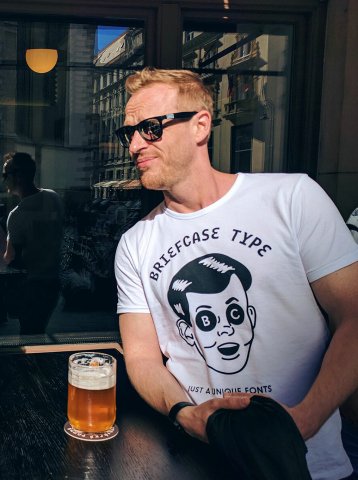
Tomáš Brousil began his studies at the Academy of Arts, Architecture and Design in Prague in 2002 under Jan Solpera and later František Štorm (typeface creation and typography). From 2008 to 2020, he served as an assistant there.
In 2003, he founded his own type foundry, called Suitcase Type Foundry, where he not only digitizes historical typefaces (e.g., Public by Stanislav Marš, Teimer's Antiqua, Ladislav based on preserved drawings by Ladislav Sutnar) but primarily publishes his own typeface families (e.g., Tabac, 2010; Idealista, 2010; Urban Grotesk, 2014). He also produces custom typefaces for various institutions and companies, such as Umprum (2012) for the Academy of Arts, Architecture and Design in Prague, Brzda (2006) for the painter Pavel Brázda, Union (2007) for the Union of Graphic Design, or Boulevard (2010) for the fast-food chain of the same name. In 2014, he co-founded Briefcase Type Foundry with Radek Sidun, which digitizes previously unrealized designs of Czech and Slovak typefaces and helps to publish typefaces by contemporary young creators, especially students and graduates of the Academy of Arts, Architecture and Design in Prague.
Terms and conditions
General Terms and Conditions
of Baobab&GplusG s.r.o., with registered office at Plavecká 14, 128 00 Prague 2,
IČO 62585231, registered in the Commercial Register kept at the Municipal Court in Prague,
Section C, Insert 33775.
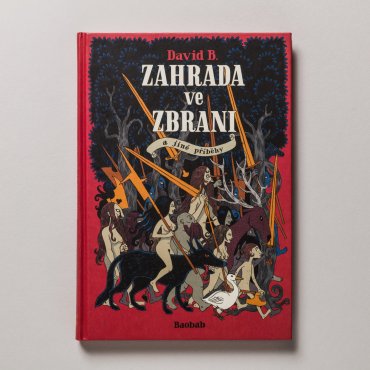
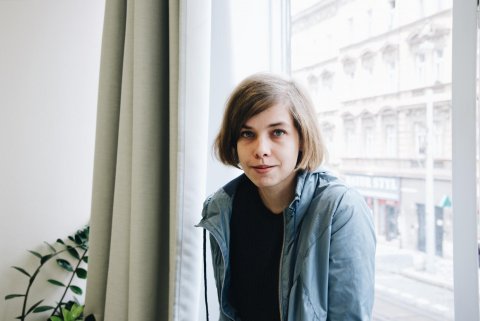
Klára Zahrádková studied illustration and graphics at Prague's UMPRUM with Juraj Horváth, interned with Kryštof Kintera and at Berlin's UDK under Henning Wagenbreth. She has authored books such as Návody k použití (Instructions for Use), Kůže kožešina trofej lasička fretka kuna otazník (Skin Fur Trophy Weasel Ferret Marten Question Mark, a photo collection from aukro.cz), Z oceli a větru (Of Steel and Wind), Gewalttätige Rezepte ohne Blut (Recipes of Bloodless Violence), Aroma souznění (Harmony’s Aroma), and Jaro (Spring). She focuses on illustration and graphic design through onkubator.com, and collaborates with the Czech experimental music scene. Living and working in Prague and Leipzig, she co-runs the XaoXax gallery and bookstore with Alžběta Zemanová, Zuzana Bramborová, and Jakub Plachý.
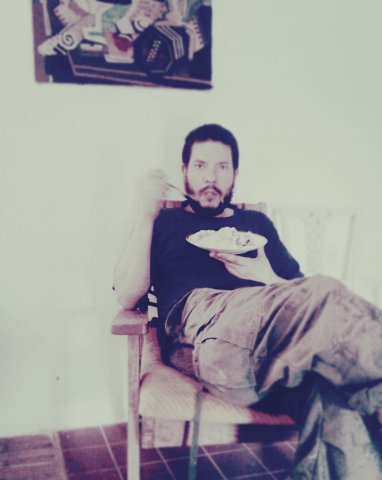
Jan Čumlivski studied Hungarian Philology and Culturology at the Faculty of Arts of Charles University (1998–2005), as well as animation, lettering, and typography at the Academy of Arts, Architecture and Design in Prague (since 2002), completing internships in Budapest, Berlin, St. Petersburg, and New York. He writes, draws, engraves, designs fonts, and prints... all of which culminate in his unique authorial books such as Kvartira 77 (2004), Ni čest, ni slávu / Weder Ruhm, noch Ehre (Not For Honor, Not for Glory)(2005), Palmáre (Attorney Fee) (2007), Union – Ideální stát (Union – The Ideal State) (2008), Kolchoz 2047 (2010), Jesus Gym (2010), Střed (Center) (2011), Žár (Blaze) (2014), Póvl (Scum) (2017)... He earns his living through graphic design and teaching (Typolab at the Slovak University of Technology in Bratislava and at the Academy of Arts, Architecture and Design in Prague). He co-organizes the Tabook festival and is editor of the Baedeker. In 2017, he held a retrospective exhibition of his work at the Drsná škola exhibition at the Slovak National Gallery in Bratislava.
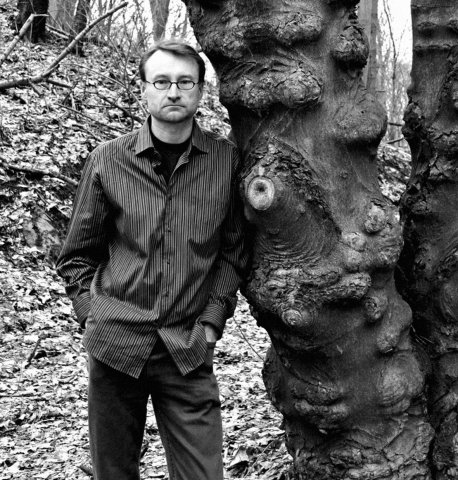
Jiří Dvořák was born in 1970 in Frýdlant and spent his childhood in Prague, aspiring to become either a botanist or an author of adventure novels. In 1993, he graduated in plant biotechnology from the Czech University of Life Sciences, where he realized that a career in science was not his calling. He worked as a proofreader and later as an editor for various publications; currently, he is the editor-in-chief of the magazine "Naše krásná zahrada" (Our Beautiful Garden). Dvořák has combined his love for biology and adventure by writing books that often tell stories about nature. He lives in Prague, enjoys photography, sleeping, and staying quiet.
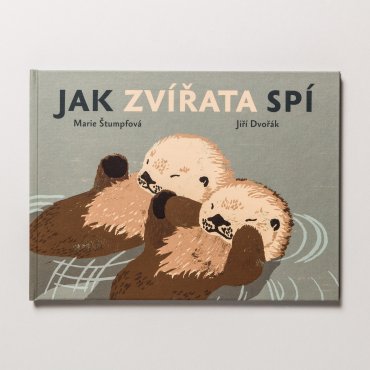
His books include Plesk! (ABR, 1997), Kvítka z čertovy pohádky (Flowers from the Devil's Tale) (Self-published, 2002), Slepice a televize (The Chicken and the Television) (Baobab, 2003), Zpátky do Afriky! (Back to Africa!) (Baobab, 2005), Minimax a mravenec (Minimax and the Ant) (Baobab, 2009), Stromovka (with Tereza Horváthová) (Baobab, 2010), Rostlinopis (Strange Truths and Fables of the Green World) (Baobab, 2012), Jak zvířata spí (How Animals Sleep) (Baobab, 2014), Havětník (The Beastiary) (Baobab, 2015), Bydlíme! (Home Sweet Home!) (Baobab, 2019), Slunečnice (Sunflowers) (Baobab, 2020).
He has been awarded the Golden Ribbon multiple times, was nominated for the Litera award for children's literature, and received the Grand Prix Bohemia for his radio fairy tales. After graduating from the Czech University of Life Sciences with a degree in plant biotechnology, he worked in various editorial offices as a proofreader and editor. He has collaborated with numerous newspapers and magazines, as well as with Czech Radio.
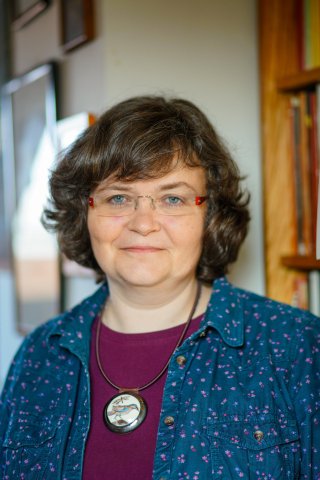
Born in 1965, Šárka Grauová is a Czech university lecturer, specialist in Portuguese studies (Romanist), and a translator from Portuguese. She teaches at the Institute of Romance Studies at the Faculty of Arts, Charles University in Prague. Her scholarly interest is primarily in Portuguese literature. She completed her studies in English and Portuguese at the Faculty of Arts, Charles University in Prague, in 1988. Grauová translates works from English and Portuguese, including those by G. Steiner, Machado de Assis, M. de Andrade, V. Ferreira, Ch. Buarque, and Lima Barreto. In collaboration with the publishing houses Torst and Triáda, she manages the Luso-Brazilian Library series, which publishes works by Portuguese and Brazilian authors.
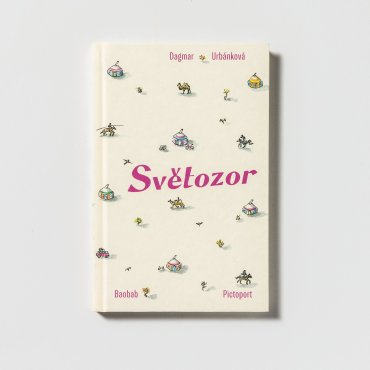
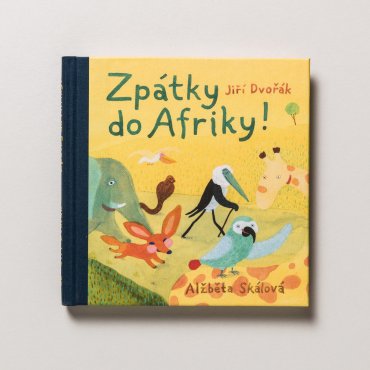
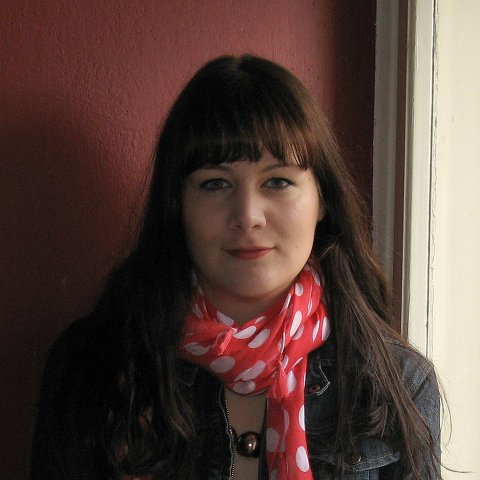
Radana Přenosilová graduated from the Illustration and Graphics Studio at the Academy of Arts, Architecture and Design in Prague. She focuses on illustration, graphic design, drawing, and painting. She lives and works in Prague.
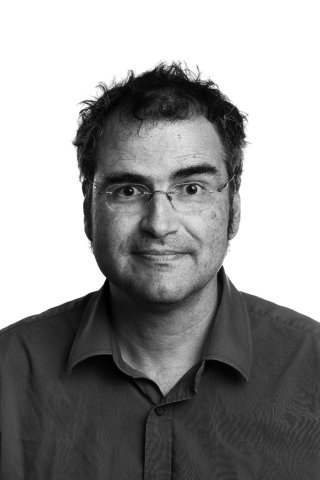
Marek Toman (born in 1967) is a writer and journalist known for his historical novels children's books. In Chvála oportunismu (In Praise of Opportunism, 2016), he explores Czech history from the perspective of the Černín Palace in Prague, focusing on figures such as J. Masaryk and R. Heydrich. Neptunova jeskyně (Neptune's Cave, 2018) captures the layered history of Prague's Czech-Jewish-German Vinohrady district and Grébovka villa through the eyes of the Neptune statue. Oko žraloka (The Eye of the Shark, 2018) delves into the stories of Czech International Brigaders, leftists, and tramps from the viewpoint of J. Klecan, the anti-hero from Fučík's Reportáž psaná na oprátce (Report From the End of the Noose). This novel led to the publication of newly discovered letters by Klecan in Zrádce, hrdina, spisovatel? (Traitor, Hero, or Writer?, 2021). In Panna (The Virgin, 2022), Toman tells a story from Příbram about a man who spent decades in hiding set against the backdrop of the communist effort to build a new society in Příbram.
His children's book Cukrárna U Šilhavého Jima (Cross-Eyed Jim’s Confectionary, 2018) is about a brave librarian promoting the beauty of literature among backwoodsmen. Neskutečná dobrodružství Florentina Flowerse (The Incredible Adventures of Florentin Flowers, 2019) depicts a boy from a good family who must rewrite the ship's log for the cruelest pirate captain around. The trilogy promoting reading and literacy concludes with "Nožička and Wohryzek" (2022), where a young Czech-American seeks his kidnapped father with the help of K. Čapek, F. Kafka, and J. Hašek.
Toman also wrote the script for the comic "Odsunuté děti" (Displaced Children, 2021) depicting the stories of Sudeten Germans' displaced children. He regularly appears in libraries, schools, and festivals in the Czech Republic and abroad, including performances with his Theatre Čučka. His books for adults and children have received multiple literary awards and have been translated into ten languages.

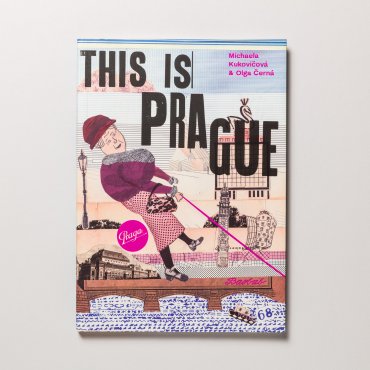
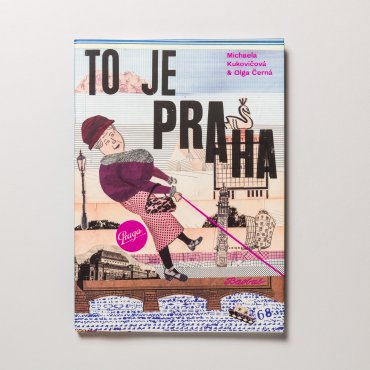
Michaela Kukovičová graduated from the animation studio at the Academy of Arts, Architecture and Design in Prague, where she now works as an assistant in the Illustration and Graphics Studio. She focuses on book and magazine illustration, animation, directing music videos and short films, and illustrating for websites. She leads children's art workshops in cities including Prague, Brno, Bratislava, Warsaw, Bucharest, and Vienna. Kukovičová collaborates with the graphic studio REDESIGN and publishes books with Baobab, Akropolis, Labyrint, and Albatros publishers. Her work breathes new life into the poetic and pop-art approach to using found materials, and is playful and often surprising. Michaela Kukovičová has won awards in competitions such as the Most Beautiful Book of the Year and the Golden Ribbon.
