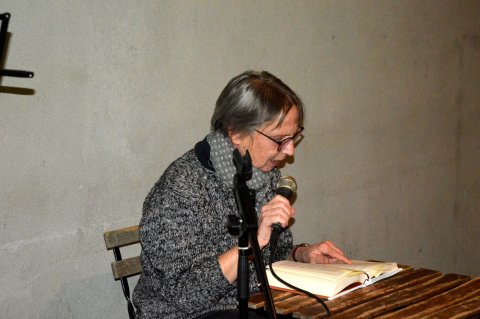
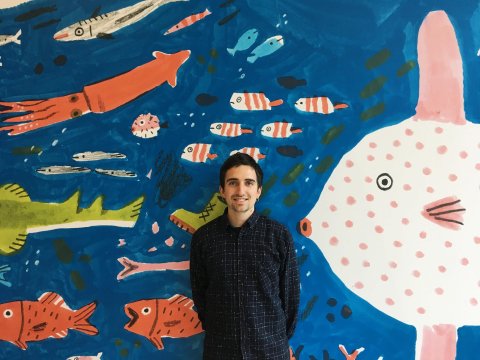
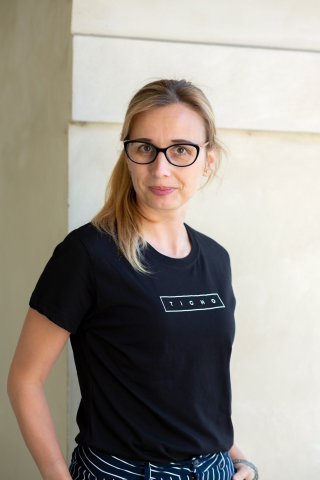
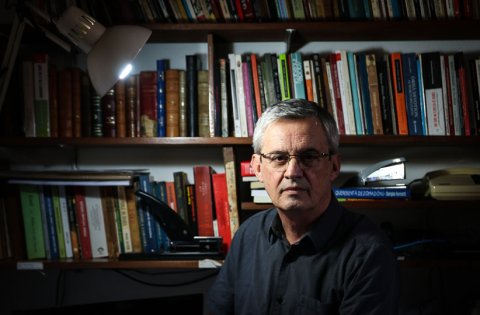
Magdaléna Křížová is a graduate of Hebrew Studies at the Faculty of Arts, Charles University. She focuses on modern Israeli Hebrew literature, and her translation workshop has produced a significant number of translations. She has introduced Czech audiences to the works of A. B. Yehoshua (novels The Lover, Mr. Mani, Journey to the End of the Millennium, and Five Seasons), and has also translated works by Sayed Kashua, Etgar Keret, Amir Gutfreund, among others. She teaches modern Hebrew literature with a focus on translation issues.
Helena Beguivinová was born in 1951 in Prague and graduated high school in 1970. She spent the 1970s mostly in Brittany. Upon returning to Prague, she worked as a librarian at the Institute of Paint Materials while also engaging in technical translations from French and English. Gradually, she shifted to specialized translations in the humanities. Since the beginning of 1989, she has worked as a freelance translator and interpreter. From 1995, she has translated books, mainly in the humanities but also fiction. She has translated works by authors such as Raymond Aron, Jean-Claude Schmitt, René Girard, Arnold Van Gennep, Gilles Lipovetsky, Claude Lévi-Strauss, Fernand Braudel, Jean-Luc Chalumeau, Maurice-Ruben Hayoun, Marthe Robert, Evelyne Sullerot, Jacques Heers, Marc Bloch, Enzo Traverso, Renaud Camus, Daniel Pennac, Eric-Emmanuel Schmitt, Jorge Semprun, Jean-Michel Guenassia, Michel Pastoureau, and even a poetry anthology from the work of Edmond Jabès.
In 2005, her translation of Michel Rozenfarb's detective novel Chapeau! received a creative award from the Translators' Association. Her translation of the youth book Winter’s End by Jean-Claude Mourlevat was nominated for the Golden Ribbon award in 2008. In 2009, Helena Beguivinová received the Jan Vladislav Prize, awarded by the French Embassy for translations supported by the Šalda Program. In 2012, her translation of Suite Française by Irène Némirovsky was awarded the Magnesia Litera prize in the category of translated literature.
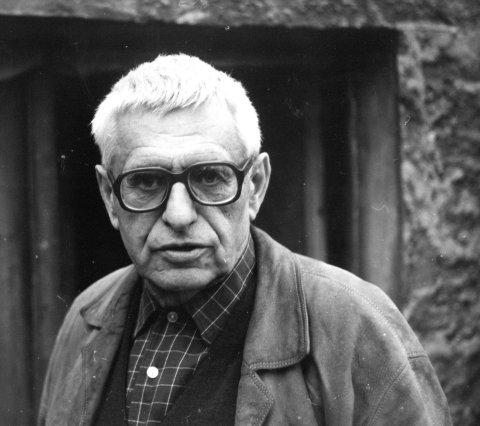
Josef Hiršal was a Czech poet and translator. He collaborated with his colleague and partner, Bohumila Grögerová, and together, they were awarded the Tom Stoppard Prize in 1986 for their work Let let. Hiršal came from a farming family. He received his primary education in Chomutice, where his family moved. After finishing elementary school, he studied at a teacher's institute in Jičín, graduating in 1940. Briefly working as a teacher and then as a forestry manager, he became an editor for the newspaper Svobodné slovo (Free Word) in 1945, followed by editorial roles at the publishing house Orbis. Between 1950 and 1958, he gradually moved through editorial positions at the publishing houses Brázda, Naše vojsko, and Československý spisovatel.
Hiršal was a member of the literary group Ohnice, centered around the poet Kamil Bednář, and published his poems in its eponymous anthology. From 1959 to 1963, he worked as the head of promotion, and in the review Knižní kultura (Literary Culture) as the deputy editor-in-chief. Starting from 1966, he dedicated himself entirely to writing and translation activities.
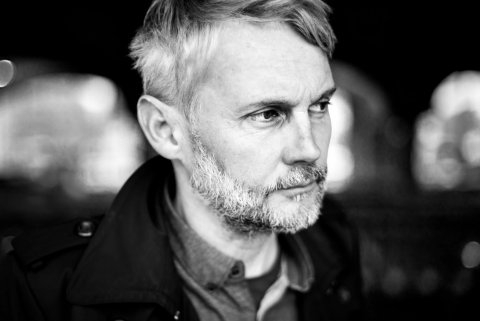
Petr Borkovec is a poet, writer, editor, translator, and literary activist. A graduate of Jan Kepler Gymnasium in Prague, he studied Czech language and literature at the Faculty of Arts, Charles University, from 1989 to 1995 but did not complete his degree. He has worked as an editor for several magazines, taught at a literary high school, and directed and dramatized literary programs.
Currently, he is an editor at Fra publishing house and a dramaturge for the Fra literary café since 2005. He leads a seminar at VŠKK and regularly collaborates as a columnist with the literatura website, Vltava radio station, and magazines A2, Host, Full Moon, as well as with the Slovak literary review Fraktál.
His poetry collections include Prostírání do tichého (1990), Poustevna, věštírna, loutkárna (1991), Ochoz (1994), Mezi oknem, stolem a postelí (1996), Polní práce (1998), Needle-Book (2003), and a free cycle of twelve poems titled A.B.A.F. (Opus), Vnitrozemí, Sebrané a nové básně 1990-2005 (2002, Fra). His prose works include Berlínský sešit / Zápisky ze Saint-Nazaire (2008, Fra; second expanded edition as Zlodějíček, 2014), Jedna věta (Revolver Revue), Milostné básně (2012, Fra), Herbář k čemusi horšímu (2018, Fra), Lido di Dante (2017, Fra), and Petříček Sellier & Petříček Bellot (2019, Fra). His children's books include Všechno je to na zahradě (2013, Běžíliška), O čem sní (2016, Běžíliška), Věci našeho života (2017, Cesta domů), and Každá věc má něco společného se štěstím (2019, Běžíliška).
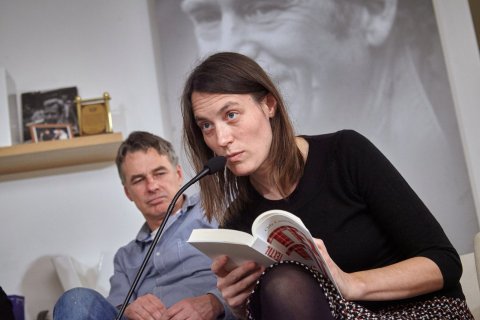
Edgar Dutka is a university lecturer (FAMU, UMPRUM), screenwriter – known for Béďa Rošťák (Béďa the Rascal), Já Baryk (Me, Baryk) – a director, and a writer. He debuted with his autobiographical novel U útulku 5 (At Shelter 5). For his novel Slečno, ras přichází (The Knacker’s Coming, Miss), he received the National Prize for Literature.
Magdaléna Platzová grew up in Prague, the daughter of writer Eda Kriseová and documentarian Josef Platz. After studying philosophy and a brief acting career, she worked as a journalist for Literární noviny and Respekt. She is the author of novels such as Aaron's Leap, The Anarchist, and Druhá strana ticha (The Other Side of Silence), two collections of short stories, and a children's book Toník a jeskyně snů (Toník and the Cave of Dreams). Since 2009, she has been living in Lyon with her husband and three children.
Jan Čumlivski studied Hungarian Philology and Culturology at the Faculty of Arts of Charles University (1998–2005), as well as animation, lettering, and typography at the Academy of Arts, Architecture and Design in Prague (since 2002), completing internships in Budapest, Berlin, St. Petersburg, and New York. He writes, draws, engraves, designs fonts, and prints... all of which culminate in his unique authorial books such as Kvartira 77 (2004), Ni čest, ni slávu / Weder Ruhm, noch Ehre (Not For Honor, Not for Glory)(2005), Palmáre (Attorney Fee) (2007), Union – Ideální stát (Union – The Ideal State) (2008), Kolchoz 2047 (2010), Jesus Gym (2010), Střed (Center) (2011), Žár (Blaze) (2014), Póvl (Scum) (2017)... He earns his living through graphic design and teaching (Typolab at the Slovak University of Technology in Bratislava and at the Academy of Arts, Architecture and Design in Prague). He co-organizes the Tabook festival and is editor of the Baedeker. In 2017, he held a retrospective exhibition of his work at the Drsná škola exhibition at the Slovak National Gallery in Bratislava.
Marek Šindelka debuted in 2005 with the poetry collection Strychnin a jiné básně (Strychnine and Other Poems), for which he received the Jiří Orten Award. Three years later, he published the novel Mistake, which was adapted into comic book form three years later. He then released two collections of short stories, Zůstaňte s námi (Stay with Us) and Mapa Anny (Anna's Map). In 2016, he published the novel Material Fatigue. His books have been translated into English, Dutch, Polish, and other languages.
Processing of personal data
- Personal data controller
- What personal data we process
- Personal data you provide to us
- Personal data that we obtain other than directly from you
- Personal data of third parties that you provide to us
- Cookies and automatically processed personal information
- Technical cookies are used for the basic functionality of the e-shop, i.e.
Tomáš Brousil began his studies at the Academy of Arts, Architecture and Design in Prague in 2002 under Jan Solpera and later František Štorm (typeface creation and typography). From 2008 to 2020, he served as an assistant there.
In 2003, he founded his own type foundry, called Suitcase Type Foundry, where he not only digitizes historical typefaces (e.g., Public by Stanislav Marš, Teimer's Antiqua, Ladislav based on preserved drawings by Ladislav Sutnar) but primarily publishes his own typeface families (e.g., Tabac, 2010; Idealista, 2010; Urban Grotesk, 2014). He also produces custom typefaces for various institutions and companies, such as Umprum (2012) for the Academy of Arts, Architecture and Design in Prague, Brzda (2006) for the painter Pavel Brázda, Union (2007) for the Union of Graphic Design, or Boulevard (2010) for the fast-food chain of the same name. In 2014, he co-founded Briefcase Type Foundry with Radek Sidun, which digitizes previously unrealized designs of Czech and Slovak typefaces and helps to publish typefaces by contemporary young creators, especially students and graduates of the Academy of Arts, Architecture and Design in Prague.
František Štorm is a typeface designer, typographer, graphic artist, educator, specialized journalist, and musician. In 1993, he founded the Střešovice Type Foundry (later Storm Type Foundry) in Prague, which offers over 800 original fonts, including some of Štorm's original creations (like Serapion, 1997; Comenia Serif, 2009; Trivia, 2012). He has illustrated, among others, the collected works of Howard Phillips Lovecraft (since 2010). He is the author of Eseje o typografii (2009) (Essays on Typography). Štorm's talent is expressed across a variety of artistic disciplines. He engages in woodcutting, watercolor, photography, music composition, writing, and lecturing…
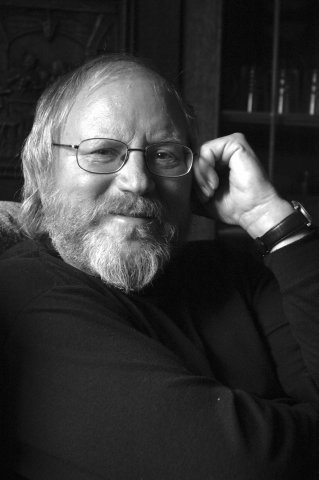
Bogdan Trojak, a poet, prose writer, journalist, Polish translator, and winemaker from the Silesian-Czech region, is a graduate of journalism from Palacký University, Olomouc. He is the founder of the literary magazine Weles and the former chief editor of Neon magazine. Trojak's literary achievements include winning the Jiří Orten Award in 1998 for his poetry collection Pan Twardowski (Mr. Twardowski) and the Magnesia Litera for poetry in 2005 for Strýc Kaich se žení (Uncle Kaich Gets Married). Additionally, he has ventured into children's literature with Nok a knedlíček (Gnocchi and Little Dumpling), a delightful compilation of verses, fairy tales, and a puppet play.
Baodílna, Tábor
The former rope workroom in a small passage near Pražská Street, served as a Baobab bookstore for three years. Now it's a space for small exhibitions, art and theater workshops for children and adults, lectures from the "Neighborhood University", or else on different subjects, such as illustration or picture books. There are also author readings, concerts and theaters during the Tabook and Mirákl festivals. Time is running slowly here, the overgrown backyard gives us a pleasing shadow in the hot sunny days and subtle sun when needed.
David Dolenský, grew up in the beautiful region of Podkrkonoší, but now lives in Prague. He often spends time in nature to get away from city life. David is studying Illustration and Graphics at UMPRUM and has completed internships in Birmingham and at Berlin's UDK. His artistic talents don't stop at drawing and illustration; he's also recently taken up tattooing, playing the guitar, and enjoys making various kinds of crafts.
Tereza Šiklová, born in 1996, completed her studies in applied painting at SUPŠ and graduated with a Bachelor's degree in illustration and graphics from UMPRUM in 2020. In 2018, she did an internship at the Glasgow School of Art. Her publications include Strofy dřevěné sochy (Strophes of a Wooden Sculpture) (2017), Země dlouhého bílého mraku (The Land of the Long White Cloud) (2017) (text by Eliška Prokopová), The alphabet is easy math (2018), Detective Story (2020), The Tree Tale (2021), and Obr Gigant (The Giant) (2021). She has held exhibitions such as Self-awareness course (2019), Bike Jesus - a joint exhibition with Sofía Tobiášová, Arizona Dream (2020), Klubovna - a joint exhibition with Darjan Hardi titled Fruit makes you happy and better (2018), and at Na Hollaru - a series of authorial posters Běží Kůň Převalského pro kávu do Milovic... (Przewalski's Horse Runs to Milovice for Coffee…) (2021), at Milovická Nádražka.
Andrea Antinori - was born in Recanati in 1992 and lives in Bologna. He studied at the ISIA in Urbino and at the Escola Massana in Barcelona. Since 2013, he has worked with many Italian publishing houses. For Corraini Edizioni he published Is this a moose? (2015), A book about whales (2016), Christ’s entry into Brussels (2017), L’arrivo di Santa Lucia (with Noemi Vola, 2018), The great battle (2019) and The Winter Promenade (2020). In 2017 and 2020 he was among the illustrators selected for the Bologna Children’s Book Fair. In 2019 The great battle won the Best Picture Book award at The China Shanghai International Children's Book Fair.
Zuzana Henešová graduated in Dutch and German philology from Palacký University in Olomouc, after spending part of her studies at Radboud University Nijmegen. Subsequently, she worked at the cultural and press department of the Embassy of the Kingdom of the Netherlands in Prague. She contributed to the editorial team of the literary monthly PLAV and collaborated with the Theatre Arts Institute, the publishing house MF Dnes, the Aspekt association, DILIA, and others. Among the authors she has translated are Alard Schröder, Anna Enquist, Marion Altena, and others. For the Czech Association of Rare Diseases, she translated a popular science book on the human genome from Dutch called Všichni jsme GENiální (We Are All GENius) (P. Bory, G. Matthijs, Galén, 2018). She currently works as a translator and interpreter at the Olomouc Museum of Art. There, as part of the SEFO project, she translated from German the first volume of the Forum edition "Revize střední Evropy" (Revision of Central Europe) (E. Brix, E. Busek, VUP, 2021).